



Of Kropotkin & Lichen: Anarchy in Nature

From Fifth Estate # 418, Summer 2026 by Stephen Duplantier

Russian revolutionary and geographer Peter Kropotkin was a pioneer in understanding how forests and steppes were a living archive of anarchist practice. Every bioregional regime has its own variations, but the commonalities shine through. His major stance was that species practicing mutual aid survive and attain their “highest development.” He saw the forest’s mingled life, stories of plants being successful by cooperation, and not as a result of Social Darwinist struggles and endless war. There are struggles, but these are against circumstances and not internecine. Cooperation, not warfare, is a natural law, and understanding nature’s patterns is a way to know and practice more.

Active Distribution Publishing: So far in 2025

From Active Distribution Publishing

Ok so I’m slipping a bit with the website updates! So far this year we’ve released 14 new titles, 6 new versions of anarchist classics and reprinted a bunch of our better selling titles. The new titles include; The Romanian Right by Hirtsui Parai-Pana a look at the misery of Romanian politics. This inspired us to doa new version of Fredy Perlman’s The Continuing Appeal of Nationalism for which we came up with a classic looking new cover, featuring some Romanian fascist clerics.

I am “Bread-Pilled” by Kropotkin’s Vision of Social Utopia

From Center for a Stateless Society by Hank Pellissier

I just finished reading The Conquest of Bread by the Russian anarchist Peter Kropotkin (1842-1921). The book inspired Catalonia syndicalists in the Spanish Civil War, Magonism in Mexico, and the Occupy movement but still… I wasn’t expecting anything, I thought I’d be very bored because the book was written in 1892, I was sure it was going to be outdated, irrelevant, but instead, to my surprise…

June 30, 1876: Peter Kropotkin Escapes from Prison

from CrimethInc.

A Tale of Derring-Do on the Occasion of His Birthday

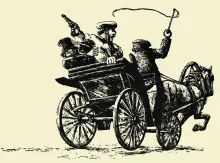
This is adapted from our forthcoming narrative history of anarchism. The above illustration is by Julian Watson from Kropotkin Escapes, a forgotten edition of Kropotkin’s account of his escape currently being reprinted by Detritus Books.

Mutual aid: Kropotkin’s theory of human capacity

from Roar Mag

Kropotkin’s theory of mutual aid remains cogent as ever, demonstrating the capacity for revolutionary change even in the harshest, most repressive environments.

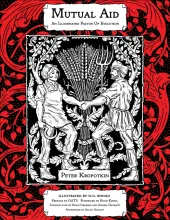
This is an abridged version of Ruth Kinna’s foreword to Kropotkin’s “Mutual Aid: An Illuminated Factor of Evolution” (PM Press, 2021).

Subscribe to Peter Kropotkin